By the Boundary Fencing team | July 2026
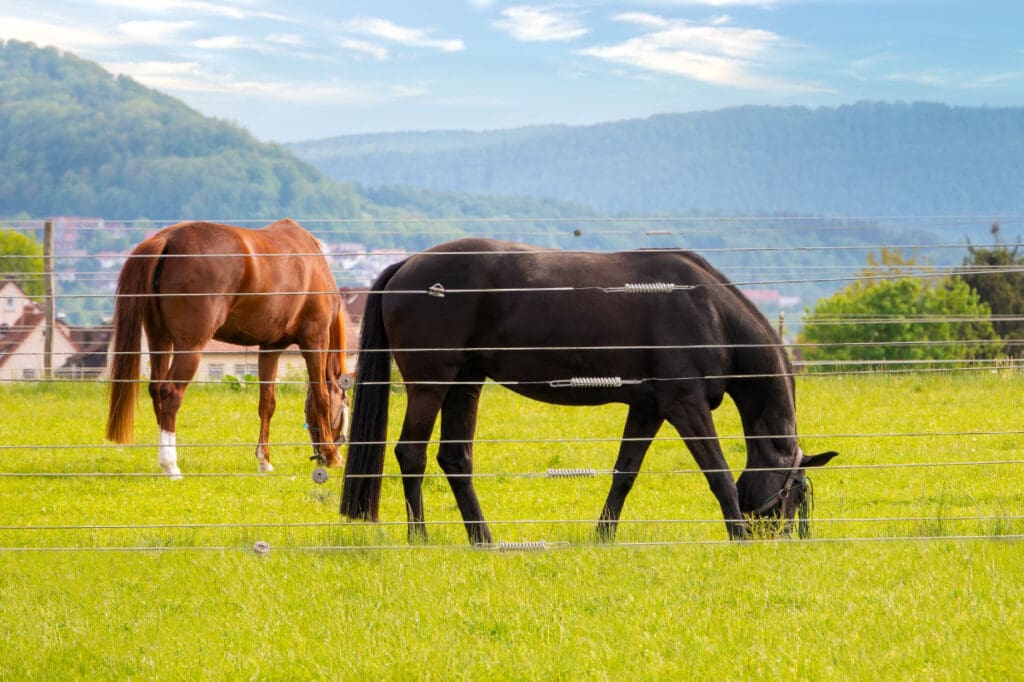
Horse fencing is a different job than fencing for cattle or keeping deer out of a garden. If you treat it the same way, you could put your horse at risk. Standard farm fencing is made to keep animals in, but horse fencing also has to protect the horse from getting hurt. What sets horse fencing apart is what happens if the fence fails: a broken board or loose wire can seriously injure a horse.
Lee Munsey, who owns Boundary Fencing in the Okanagan, sometimes gets calls from people who think one type of fence will work for every animal.
What Makes Horse Fences Different from Standard Ag Fences?
Barbed wire is built to keep livestock contained, and deer fencing is built to keep deer out of a garden. Horse fencing does something different: it keeps a horse contained and safe inside the paddock. Lee explains the difference this way:
“Horse fence still has to do its job of containment, but everything about the design leans toward the safety of the animal.” — Lee Munsey, owner, Boundary Fencing
This difference affects almost every choice you make, like the size of the mesh grid, how far apart the posts are, and where rail fencing fits in for a paddock.
Who Needs Horse Fencing?
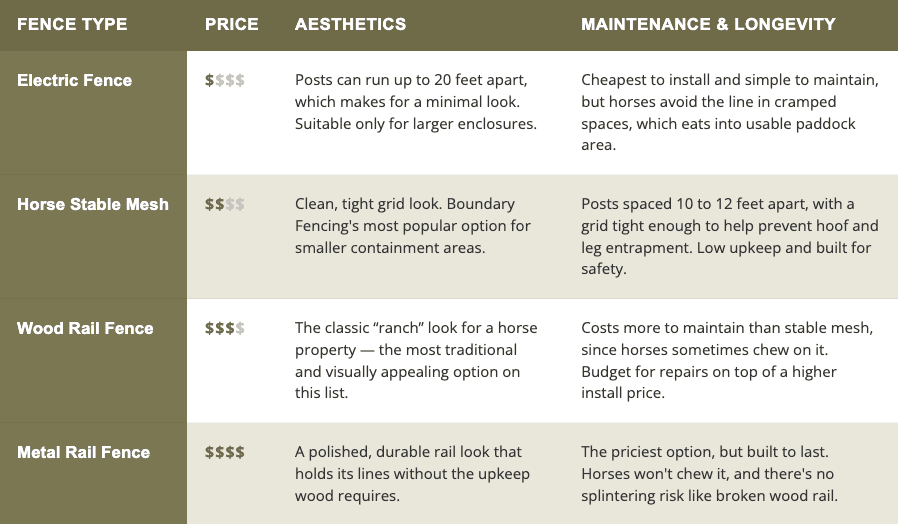
Among the clients who call for horse fencing, most already own horses and need to fence a new property or update an existing paddock. Of the horse fencing systems Boundary Fencing installs, the most common choices are horse stable mesh, rail fencing, and electric fencing. Budget is a big factor, in part due to the size of the enclosures required for horses.
“Usually our clients understand what’s best for their horses.”
For the ultimate in longevity, safety, and aesthetics, Lee recommends a metal rail / steel board fence system from his chosen supplier, Buckley Fence.
Comparison of Horse Fencing Options
Lee’s general advice for a budget-conscious customer is to use horse stable mesh for smaller areas and electric fence for larger paddocks. For people interested in the nicest aesthetic or longest-lasting fence, he recommends a wood rail or metal rail fence.
“Metal rail fences are very durable. Horses rarely chew on it, and there are minimal safety hazards with metal. If a horse breaks wood, there can be sharp edges. Metal takes a lot more force to break, and it won’t splinter the same way… these fences last a really long time.”
The Most Common Mistake
“Most horse owners know how to protect their animals and usually have a good idea of the type of fence they need,” Lee says. Problems happen when someone tries to save money by using standard woven wire, deer fencing, barbed wire, or high-tensile smooth wire instead.
“Some people might not be aware that common pagewire can catch a hoof and tangle up the horse.”
Horse stable mesh is designed to prevent this problem, with a grid tight enough to help stop a hoof or leg from getting caught. This matches advice from equine extension programs at the University of Minnesota and Penn State, which warn against any gaps big enough to trap a hoof or head.
What’s the Best Choice for Your Horse Fence?
All of these options are safer for horses than standard farm fencing. The best choice depends on your paddock size, budget, and how much maintenance you want to do. Before you buy materials, talk to Boundary Fencing about your paddock. The wrong fencing is a mistake you might not notice until your horse gets hurt.
The team at Boundary Fencing is happy to answer all of your questions about the best fence for your property. Contact or request a quote from Boundary Fencing.
Frequently Asked Questions
Q: How far apart can horse fence posts be?
A: It depends on the type of fence. For electric fences, posts can be up to 20 feet apart. For horse stable mesh, posts should be no more than 10 to 12 feet apart to help prevent sag.
Q: What’s the cheapest horse fencing option?
A: Electric fencing is the cheapest option, but Lee recommends against it for small or tight pens because horses avoid the fence and lose precious space.
Q: Is wood rail fencing a good choice for horses?
A: Wood rail fencing has the most classic look, but it costs more to maintain than horse stable mesh because horses will likely chew on it over time.