
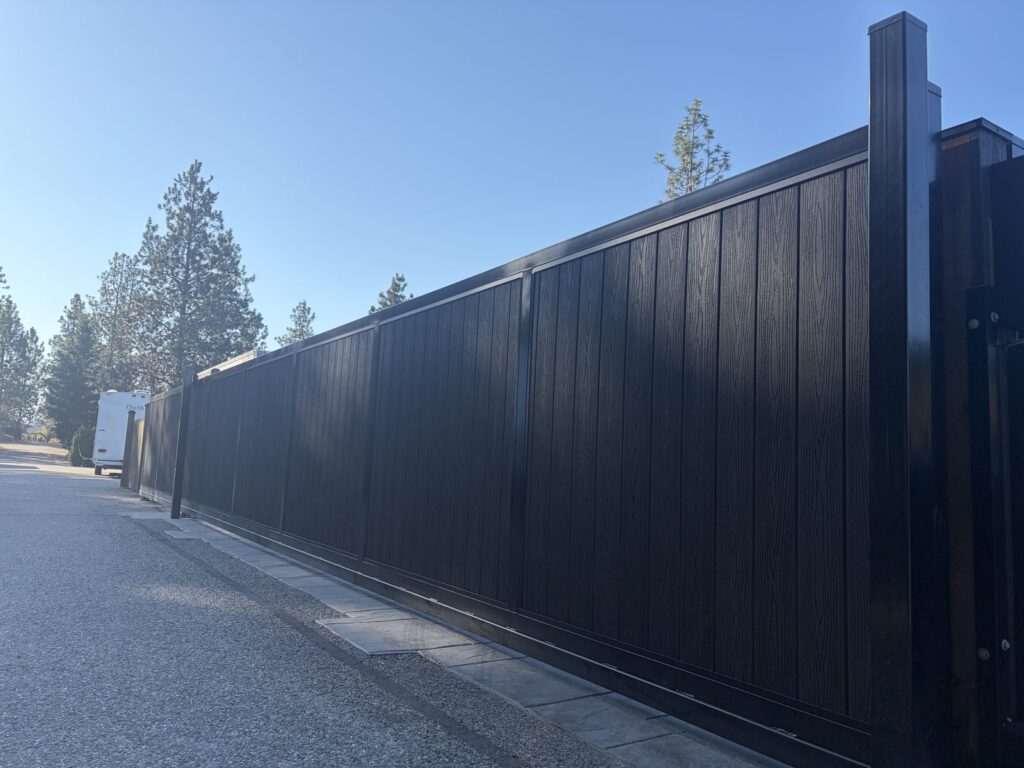
Cantilever driveway gates rely on rollers, a drive system and safety sensors, and every one of them needs a yearly check.
By Lee Munsey, Owner at Boundary Fencing | October 2026
Automatic driveway gates are convenient, secure, and built to operate for years, but they are not maintenance-free.
Many of the gate operator service calls we see at Boundary Fencing come down to relatively simple issues: a misaligned photo eye, a dead sensor battery, hinges that are starting to bind, or a component that hasn’t been checked in several years.
A little preventative driveway gate maintenance can help identify these problems before you end up with a gate that won’t open or close.
Common Gate Operator Problems
Two of the most common issues we encounter are photo eye problems and dead batteries in wireless safety devices.
Both are safety-related, so when something isn’t working correctly, the gate operator may intentionally stop functioning rather than ignore a safety device.
Photo Eyes: When Your Gate Won’t Close
Photo eyes monitor the gate opening for obstructions. If the operator believes something is blocking that opening, it won’t close the gate.
Sometimes there really is an obstruction. Other times, the photo eye itself is the problem. Common causes include:
- A photo eye being bumped by a person, vehicle, or animal and knocked out of alignment
- Weeds or other vegetation growing in front of the sensor
- Dirt or debris blocking the lens
- Frost or ice building up on photo eyes that aren’t equipped with heaters
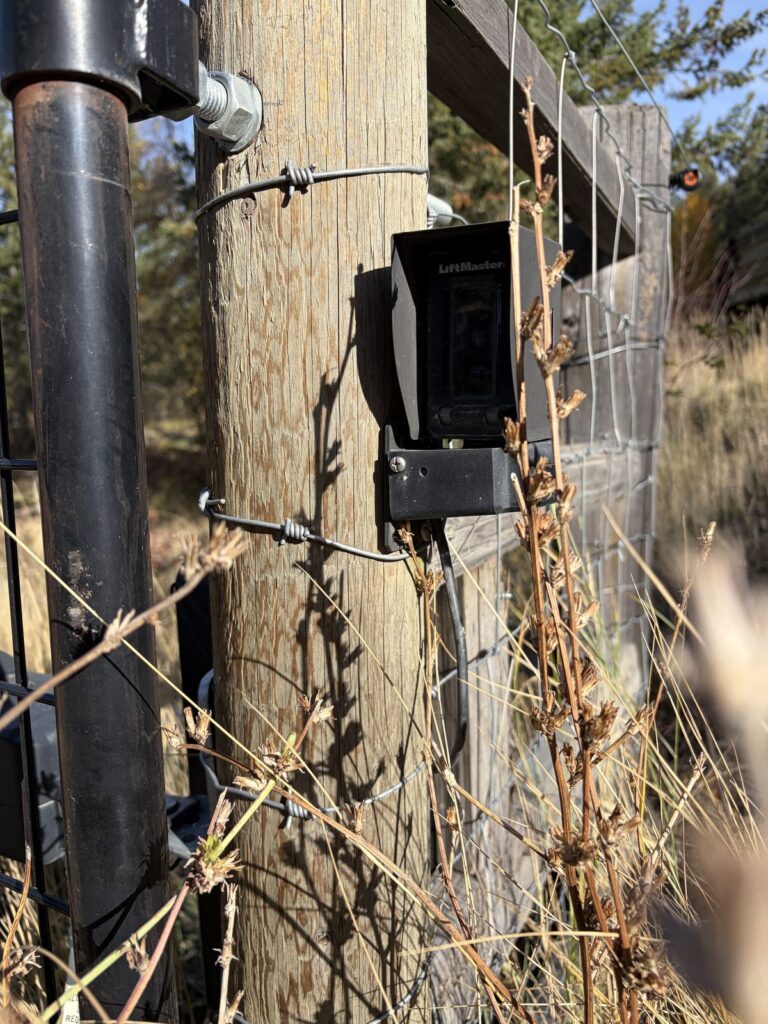
Weeds growing in front of this LiftMaster photo eye can make the operator think something is blocking the gate.
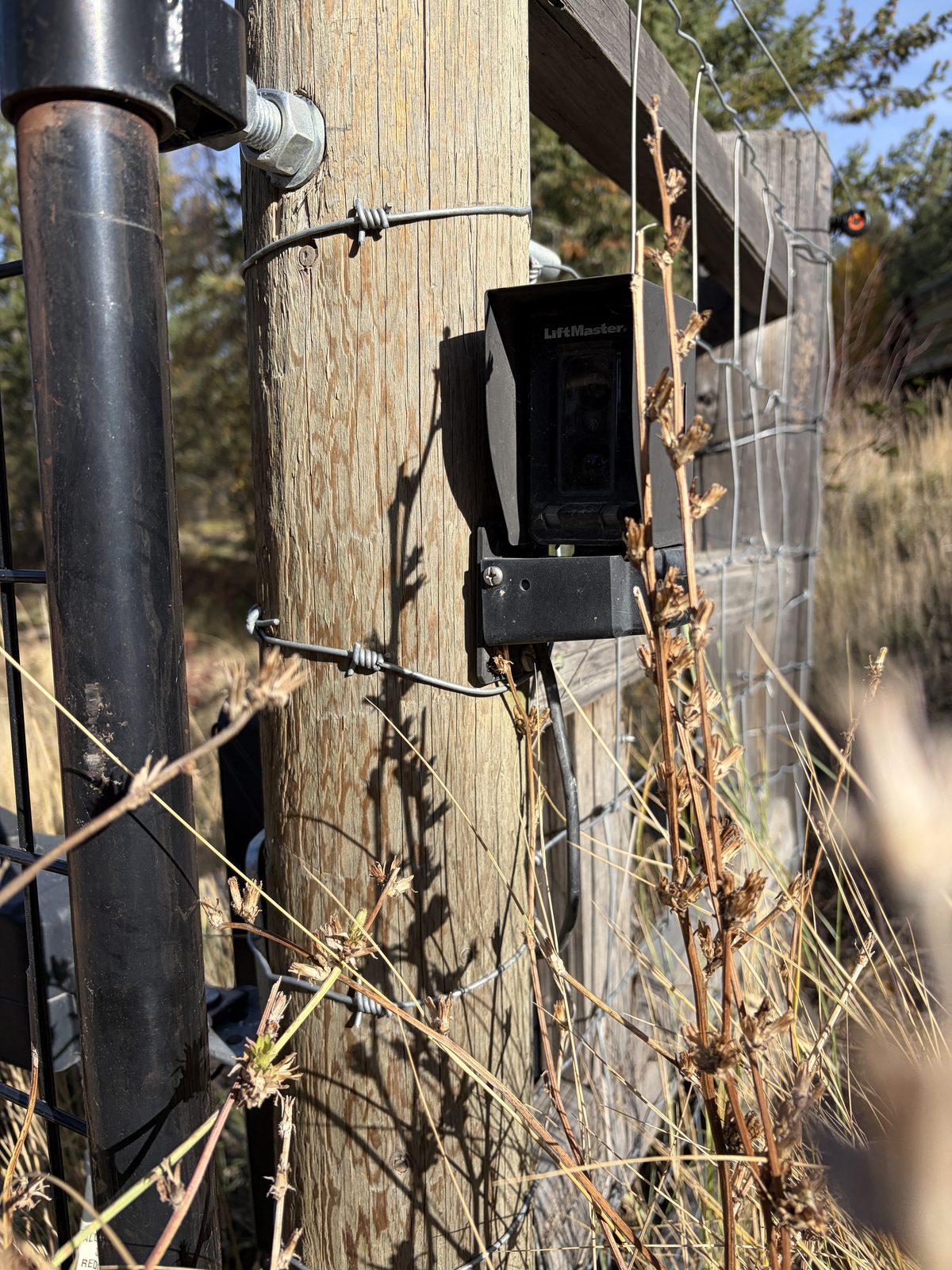
The result can be a gate that remains open because the operator thinks something is in its path.
Keeping vegetation trimmed and periodically checking that the photo eyes are clean and properly aligned can prevent many of these problems.
Edge Sensors: When Your Gate Won’t Open
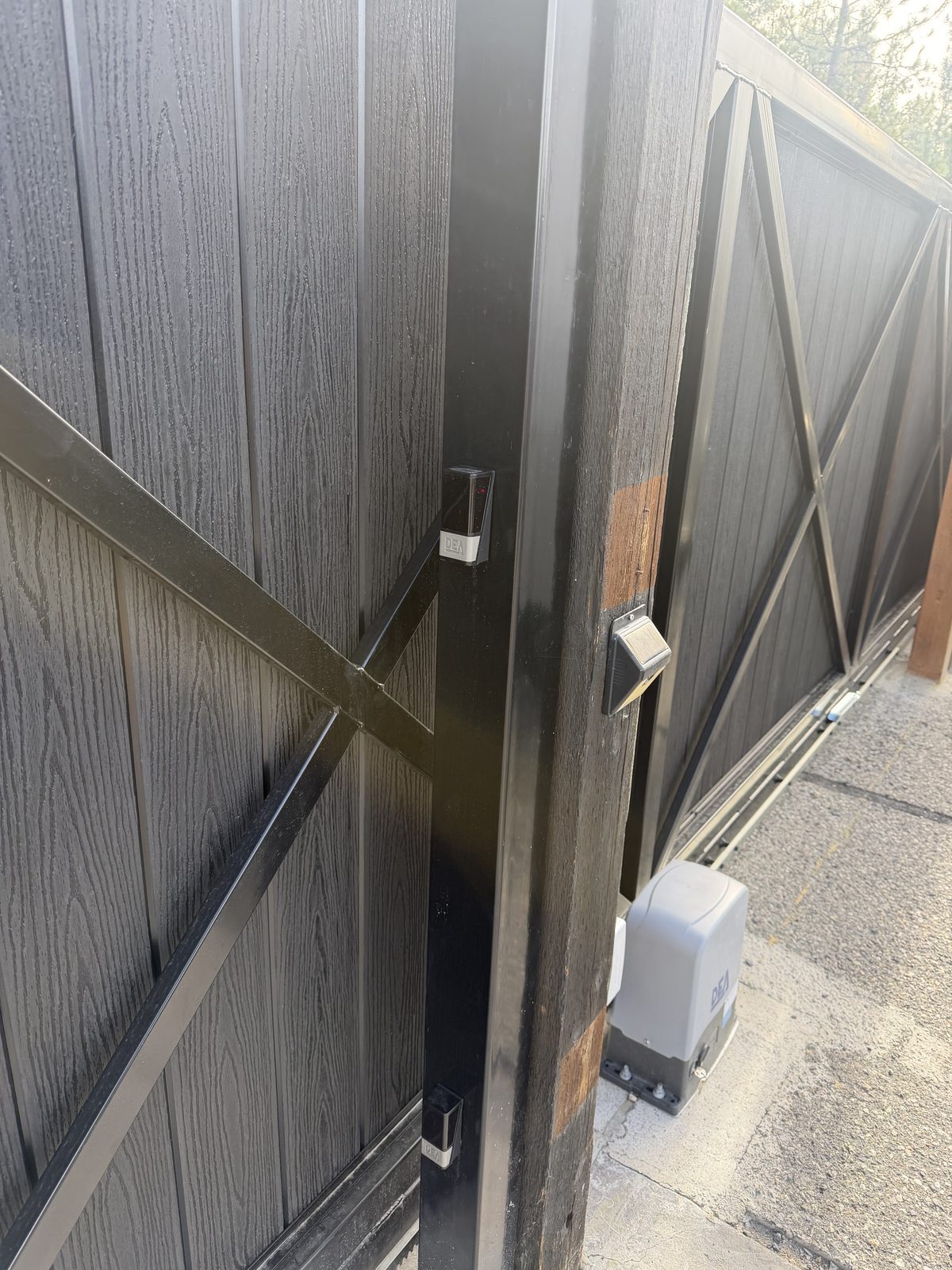
Cantilever gates may also have wireless edge sensors as part of their safety system. These sensors commonly rely on batteries.

A DEA wireless edge sensor on a cantilever gate. If its battery dies, the operator may keep the gate closed.
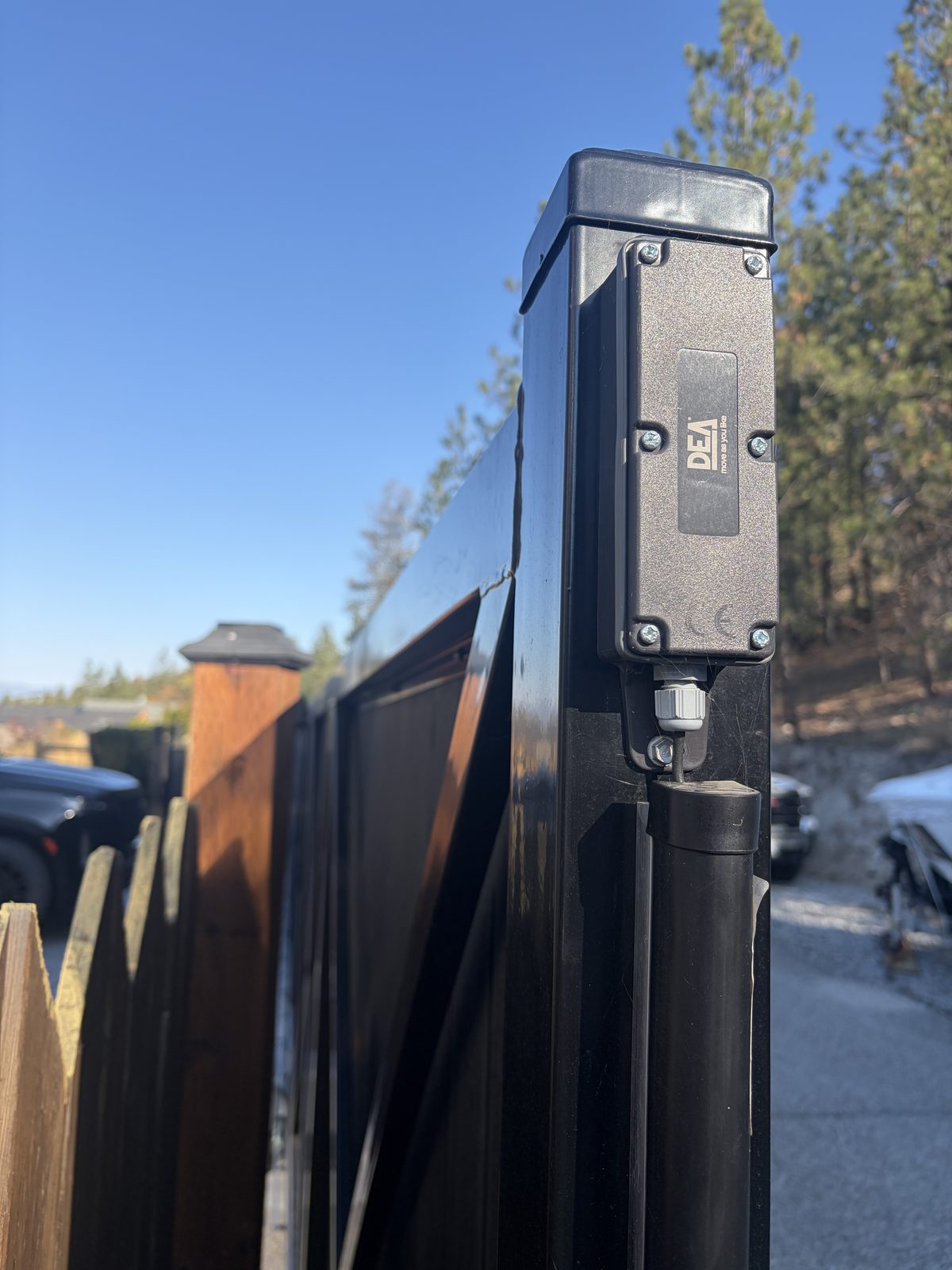
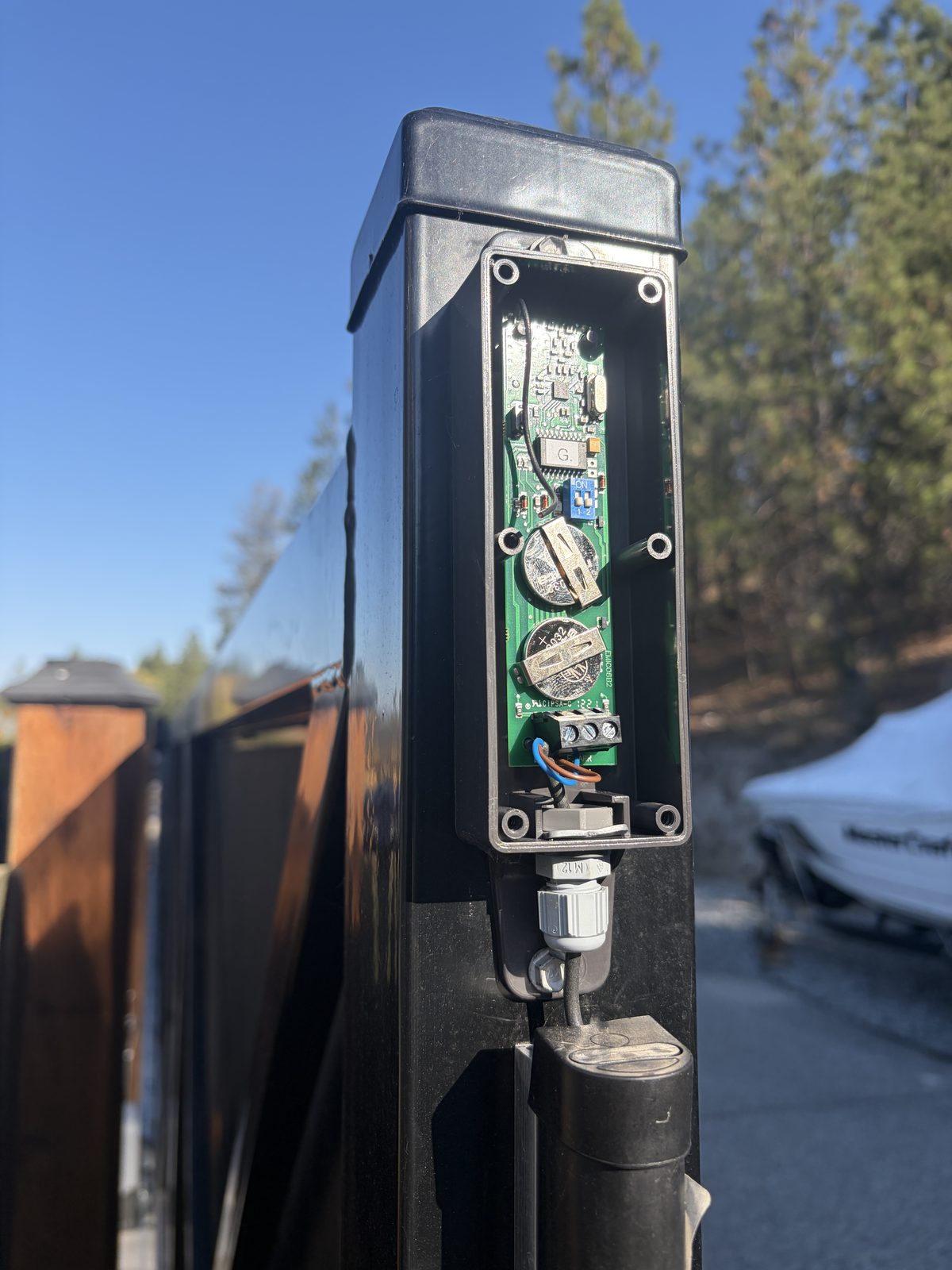
If that battery dies and the operator can no longer communicate properly with the safety device, the system may prevent the gate from operating.
This can create almost the opposite symptom of a photo-eye problem: instead of being stuck open, the gate may remain closed.
We recommend making battery replacement part of your regular maintenance schedule. The batteries may last longer than a year, but replacing them annually creates a simple routine that’s much easier to remember than waiting for them to fail.
Inside the DEA edge sensor. Swapping these batteries once a year is easier to remember than waiting for them to fail.
Maintaining Cantilever and Sliding Gates
The gate itself is just as important as the operator.
Many cantilever and sliding gate operators use a chain-and-sprocket drive system. The chain should periodically receive a suitable dry or film-free lubricant to keep it operating smoothly without attracting excessive dirt and debris.
The gate’s rollers should also be inspected. Check for rollers that are:
- Loose
- Binding
- Worn
- Misaligned
A properly adjusted cantilever gate should move relatively easily when put in manual operation mode or disconnected from the operator.
Once a year, put the operator into manual mode and move the gate by hand. If it suddenly takes substantially more effort to move than it used to, don’t expect the operator to compensate for the problem. Find out why the gate is binding.
Maintaining Swing Gates
Swing gates have fewer moving components associated with the gate itself, but they still need periodic inspection.
Check the hinges for wear and alignment and look for signs that the gate is beginning to sag.
Just like a cantilever gate, a swing gate should be tested independently from its operator. Put the operator into manual mode and move the gate through its normal travel.
The gate should move smoothly without relying on the operator to force it.
If the gate is difficult to move manually, correcting the mechanical problem can reduce unnecessary effort for the operator.
Winter Driveway Gate Maintenance in the Okanagan
Winter creates a few additional challenges for automatic gates.
Snow and ice can build up around cantilever gate rollers and other moving components. If that buildup increases the force required to move the gate, the operator’s safety system may detect the additional resistance and stop the gate from operating.
Frost on photo eyes can cause similar problems by making the operator think the gate opening is obstructed.
Photo eyes without heaters can frost over in winter, and the operator may read that frost as an obstruction.
These problems haven’t been as common during some of our milder recent winters, but they’re worth checking whenever a gate suddenly stops functioning during freezing or snowy weather.
Solar-Powered Gate Operators Need Extra Attention
Solar-powered gate operators can work well during the summer when the solar panel receives plenty of sunlight.
Winter is a different story in the Okanagan.
Shorter days and extended periods of cloud cover can make it difficult for a solar system to maintain adequate battery charge.
For customers relying on solar power, we recommend keeping a spare fully charged battery somewhere protected from freezing temperatures, such as a garage. During periods of limited solar charging, the battery can be swapped approximately once a month to keep a fully charged battery in the system.
Solar systems are particularly important to monitor before and during winter rather than waiting until the gate stops working. If a battery is drawn down enough to freeze, it’s going to need to be replaced.
Don’t Forget the Operator’s Backup Batteries
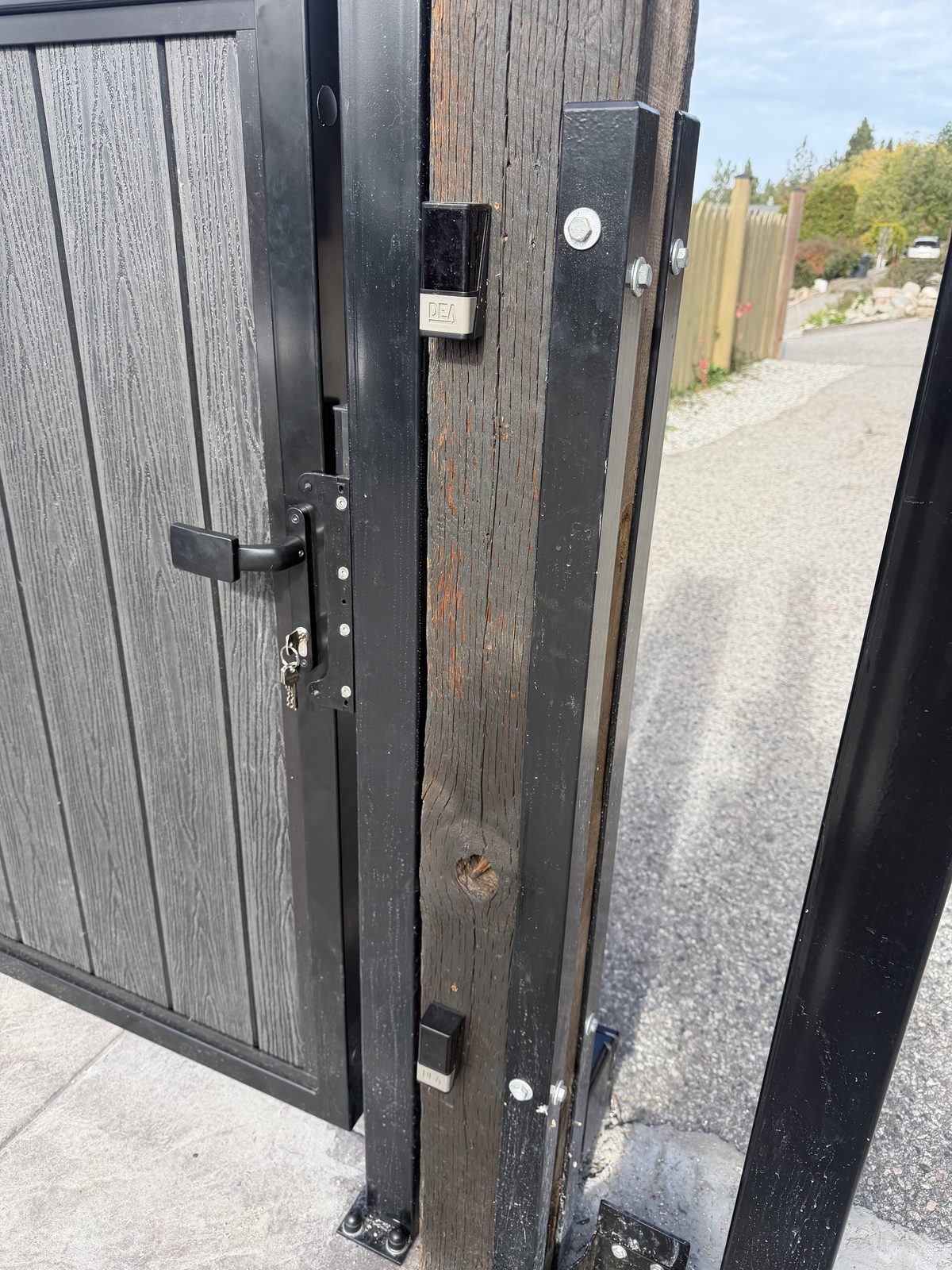
Even operators connected to conventional power may contain backup batteries inside the control box.
A DEA operator at the base of a cantilever gate. Operators on conventional power may still carry backup batteries in the control box.
These batteries should be inspected periodically and may require replacement approximately every four to five years, depending on the system and operating conditions.
Frequent battery failure, however, can indicate a larger problem.
We’ve encountered operators where an issue with the control system caused the batteries to be overcharged. Simply replacing those batteries every year wouldn’t address the actual problem.
If batteries are failing much sooner than expected, the goal should be to diagnose the cause rather than repeatedly replacing the symptom.
What Should an Annual Gate Maintenance Service Include?
Boundary Fencing offers an annual gate operator maintenance service for customers who would prefer to have their system professionally inspected rather than manage these items themselves.
A preventative maintenance visit could include checking:
- Gate movement and alignment
- Cantilever rollers or swing-gate hinges
- Chain and sprocket condition and lubrication
- Photo-eye operation and alignment
- Safety edge operation and batteries
- Backup battery condition
- Operator function and safety systems
- Signs of abnormal wear, binding, or excessive operating force
- Solar charging systems, where applicable
Contact us for current pricing on annual maintenance.
The objective isn’t just to service the operator. It’s to inspect the entire gate system and identify small problems before they become larger repairs or leave the property owner with a gate that won’t operate.
Automatic Gates Aren’t Maintenance-Free
A properly designed and installed automatic gate system should provide years of reliable service, but it still needs periodic attention.
“Gate operators aren’t maintenance-free. Every year they need a little TLC.”
Lee
A yearly inspection, some basic preventative maintenance, and replacing batteries before they fail can prevent many of the service issues we see in the field.
Need Your Automatic Gate Serviced?
Boundary Fencing installs and services automatic driveway gates throughout the Okanagan and Shuswap. We can inspect the gate, operator, safety devices, and mechanical components to determine whether the system simply needs maintenance or whether there’s an underlying problem that should be corrected.
Contact Boundary Fencing to schedule gate operator service or discuss a preventative maintenance plan for your automatic gate system.