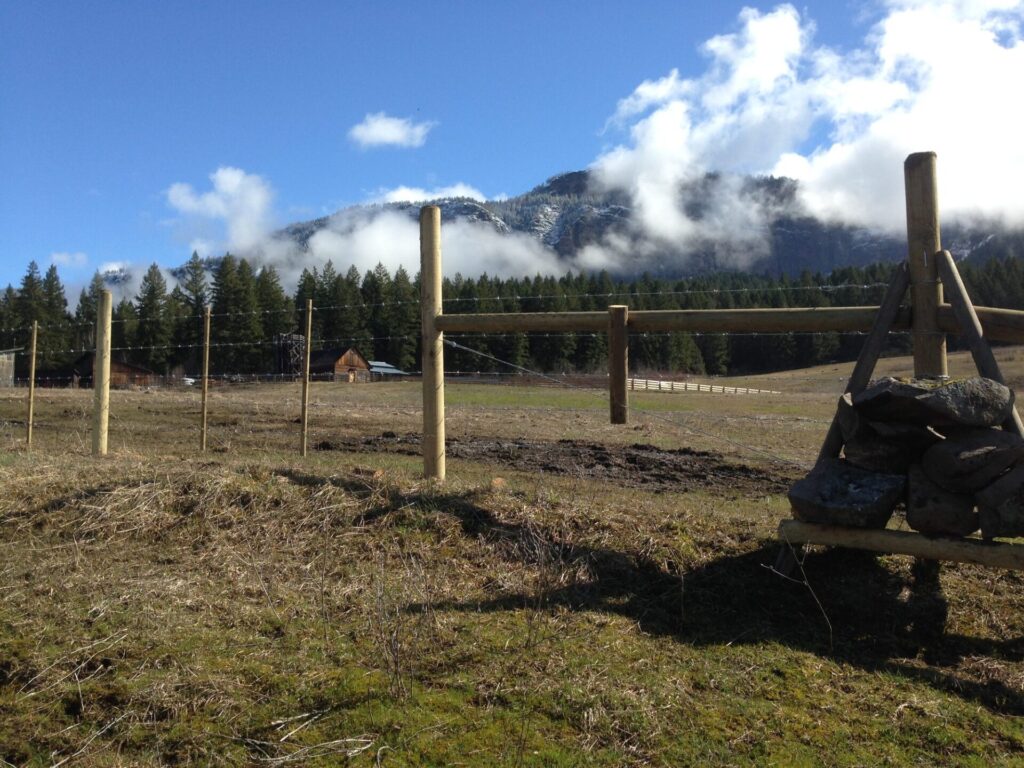
An H-brace and rock jack anchor the corner of this barbed wire fence. Corners and terminal points carry the tension of the fence, making proper construction essential for a strong, long-lasting installation.
By Lee Munsey, Owner at Boundary Fencing | September 2026
Choosing livestock fencing isn’t simply a matter of enclosing a pasture. Different animals interact with fences differently, and a fence that works well for cattle may be a poor choice for goats or sheep.
At Boundary Fencing, we install agricultural fencing throughout the Okanagan and Shuswap. One of the first things we consider when recommending a fence is what animals the fence needs to contain.
There isn’t one farm fence that is best for every application. In short: barbed wire or electric fencing for cattle, page wire for sheep, a 2-inch by 4-inch grid for goats, and, more cautiously, page wire with a low electric strand for pigs. Here’s how we typically approach each one.
Cattle Fence: Why Barbed Wire Is Still Hard to Beat
For cattle, a barbed wire fence remains one of our most common recommendations. It is economical, proven, and very effective when properly installed.
Electric fencing can be even more economical and works extremely well for cattle. However, it comes with additional considerations. An electric fence for cattle relies on a properly functioning energizer, adequate grounding, good electrical connections, and ongoing vegetation and fence-line maintenance. The B.C. Agricultural Fencing Handbook covers energizer and grounding setup in detail.
For a straightforward, durable cattle fence that does not depend on a power source, barbed wire remains a practical choice.
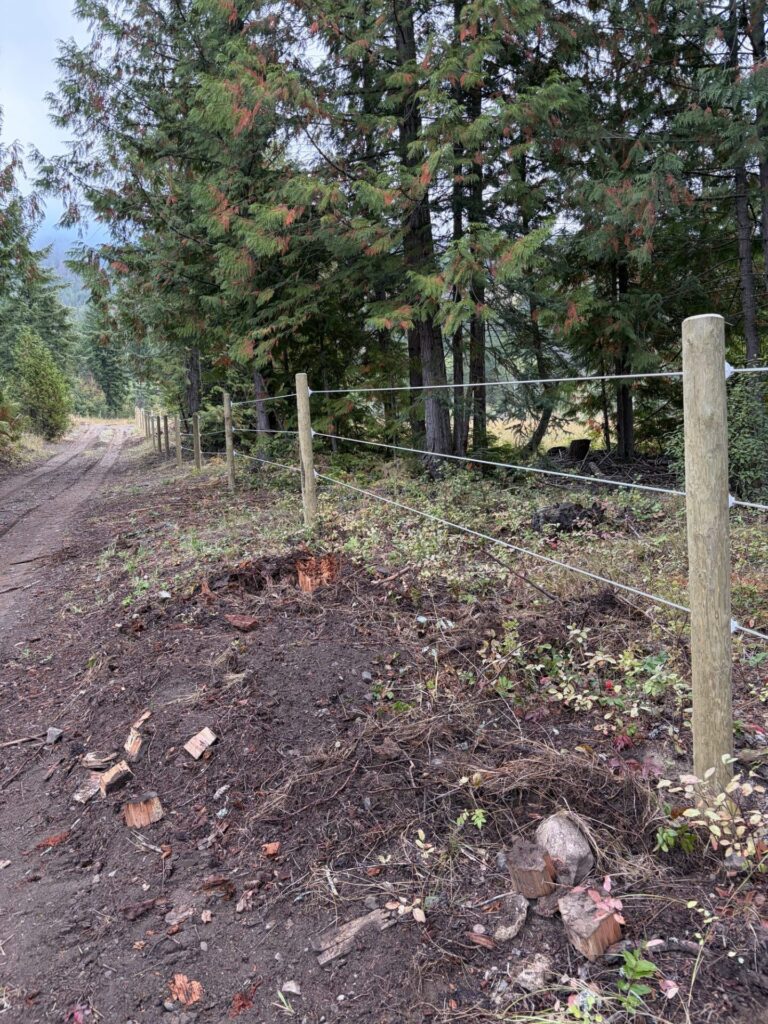
Electric fencing works well for cattle, but it depends on a working energizer, good grounding, and a maintained fence line.
Can You Use a Page Wire Fence for Cattle?
Page wire can also be used for cattle, particularly when the property needs to contain multiple types of livestock.
One concern is that cattle can lean or rub against the fence. Over time, that pressure can stretch and distort the wire.
When we install page wire in an area that may also have pressure from cattle, we may recommend adding a strand of barbed wire or electric wire to discourage cattle from pushing and rubbing against the page wire itself.
Sheep Fencing: Page Wire Is a Good Fit
Sheep are generally well suited to page wire fencing and tend to create fewer fencing problems than some other livestock.
A properly tensioned page wire fence provides a physical barrier without requiring the animals to be trained to respect an electric fence.
Electric fencing can also be used for sheep, but their wool can reduce the effectiveness of electrical contact. Fence design, wire placement, voltage and animal management all matter if electric fencing is going to be relied upon as the primary containment system.
For many properties, page wire provides a simple and reliable solution for sheep.

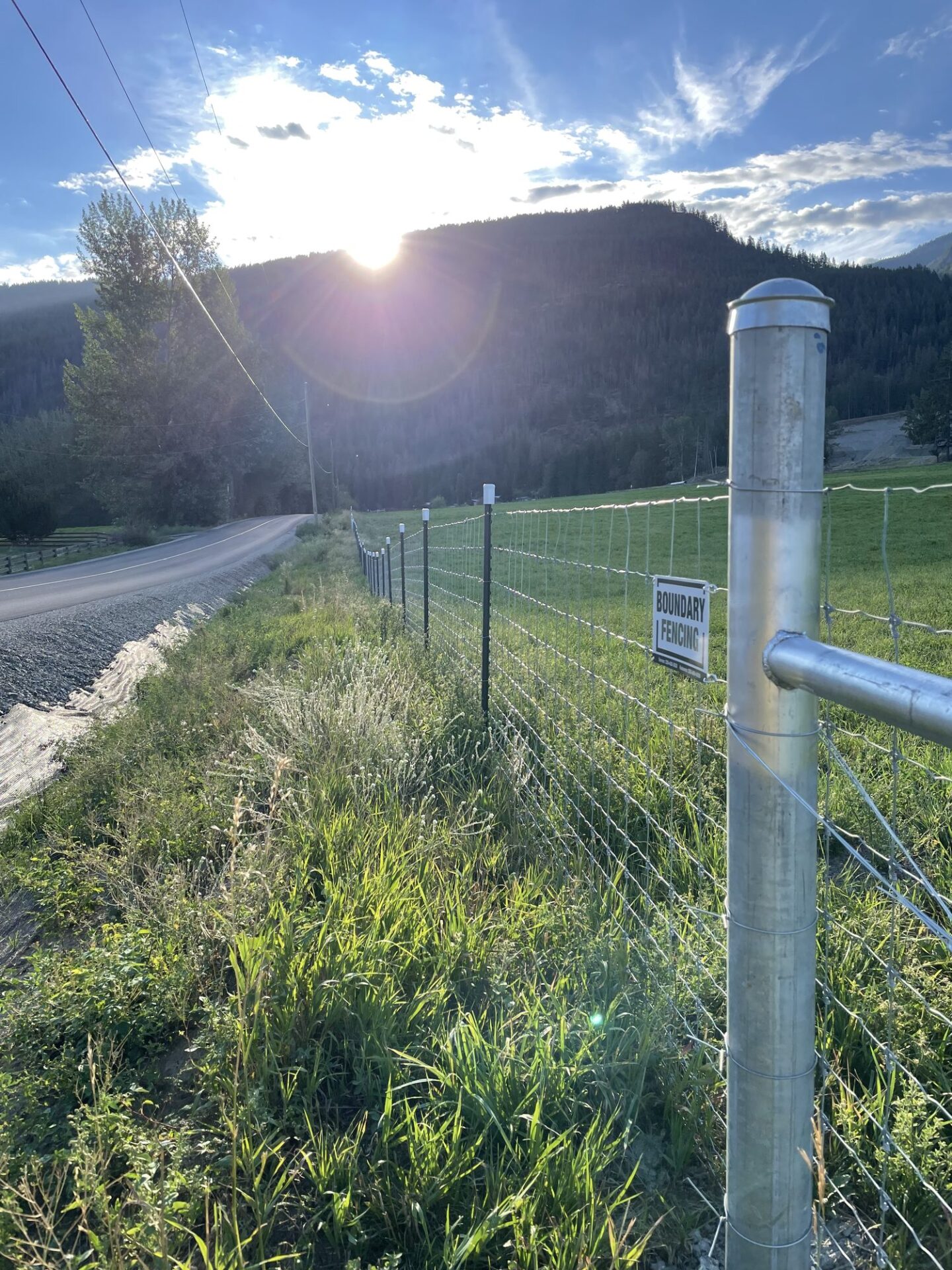
Page wire on steel T-posts, tied into a galvanized steel corner post and brace.
Goat Fence: Why Grid Size Matters
Goats require more consideration.
One of the most common mistakes is using standard page wire with openings large enough for a goat to put its head through. Many common agricultural page wires have vertical wires approximately six inches apart.
A goat can put its head through the opening and then have difficulty getting it back out, particularly if it has horns.
For goats, we generally recommend a much tighter grid.
A 2-inch by 4-inch grid is a good option. A 4-inch by 4-inch grid may also work in some situations, although that wire is less common and can still allow some goats to get their heads caught.
This is a good example of why choosing agricultural fencing based only on price can create problems. The fence may technically surround the pasture, but that doesn’t necessarily mean it is suitable for the animals inside it.
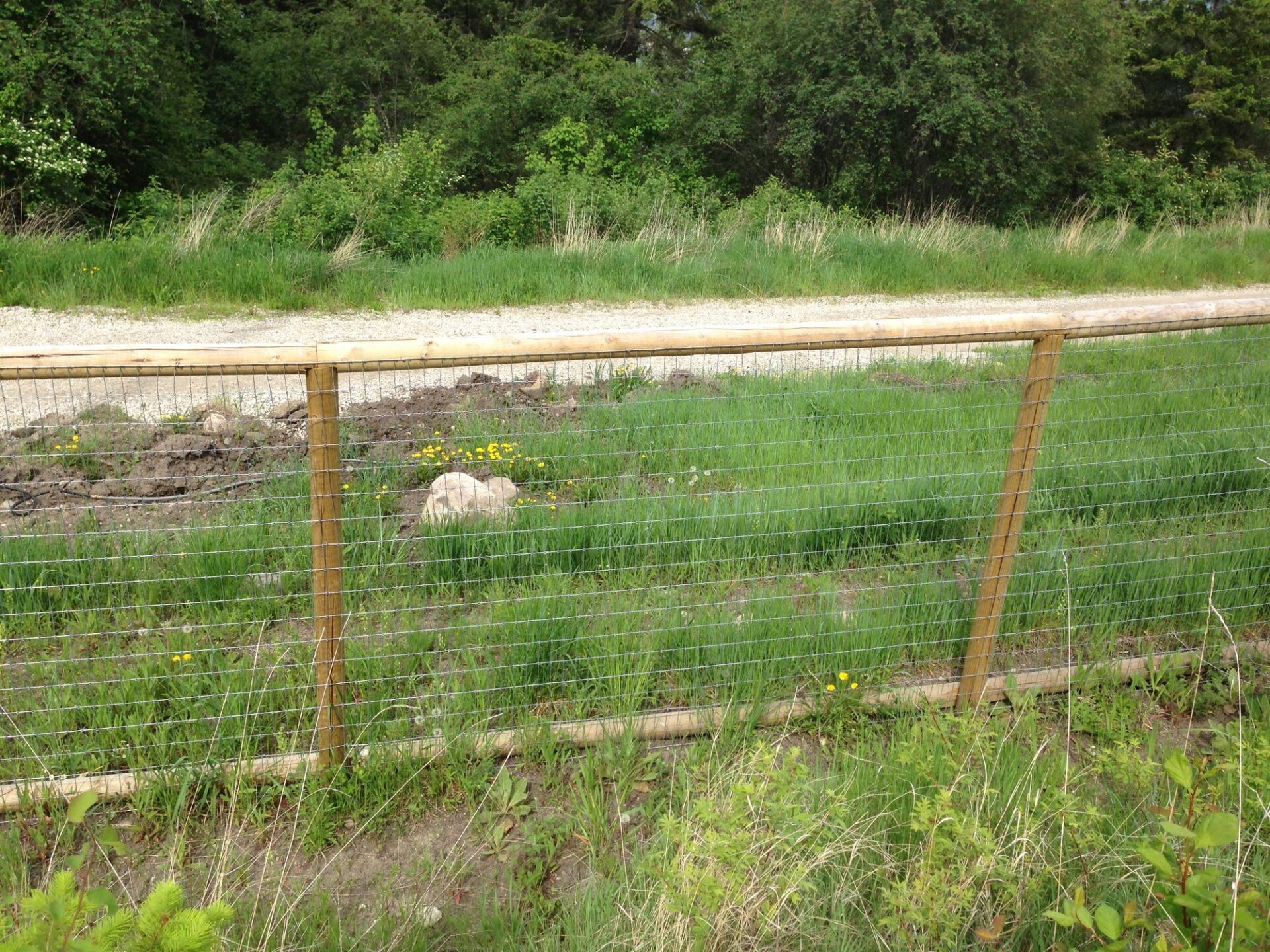
A tighter grid keeps goats from putting their heads through the fence.
What About Pig and Hog Fencing?
We don’t install enough pig fencing to claim the same level of experience we have with cattle, sheep and goats, so our recommendations here are more cautious.
Page wire can provide the physical barrier, but pigs may push or rub against it. Adding a low electric strand can help discourage contact with the fence and reduce the amount of pressure being placed on the page wire.
The exact design should be based on the animals, enclosure and management practices rather than assuming a standard livestock fence will work.
Not All Page Wire Is the Same: Why High-Tensile Wire Is Worth It
Grid size isn’t the only consideration when choosing page wire. The tensile strength of the wire also matters.
Where animals are likely to push against a fence, we recommend using higher-tensile-strength page wire whenever practical.
Higher-tensile wire costs more, but on the scale of an agricultural fencing project, the difference in material cost is often relatively small compared with the total installation cost.
In our experience, the improvement is worthwhile. Higher-tensile wire holds its shape better, resists stretching and generally provides a better long-term fence.
That’s why we recommend it based on performance rather than simply choosing the least expensive roll of wire available.
Terrain Rarely Changes the Wire, but Bedrock Changes the Installation
Most normal changes in terrain and soil conditions don’t significantly change which type of page wire we recommend.
Bedrock, however, can make installation considerably more difficult.
Page wire needs to follow the ground closely. When exposed bedrock or irregular rock formations prevent the fence from following the terrain, gaps can develop underneath it. Those gaps cause the most trouble when the fence needs to contain smaller animals.
In those situations, the challenge is less about selecting a different type of page wire and more about designing and installing the fence appropriately for the site.
Start With the Animal, Not the Fence
The right agricultural fence depends on what you’re trying to accomplish.
| Livestock | Recommended Fence | Watch For |
|---|---|---|
| Cattle | Barbed wire or electric | Electric needs a working energizer, grounding, and fence-line maintenance |
| Cattle with other livestock | Page wire plus a strand of barbed or electric wire | Leaning and rubbing can stretch page wire |
| Sheep | Page wire | Wool can reduce electric contact |
| Goats | 2″ x 4″ grid (4″ x 4″ in some cases) | 6″ openings can trap heads, especially on horned goats |
| Pigs | Page wire, possibly with a low electric strand | Pushing and rubbing; design around the herd and enclosure |
For cattle, barbed wire or electric fencing may be the most practical and economical solution. For sheep, page wire is generally straightforward and effective. For goats, a tighter-grid page wire helps prevent animals from getting their heads caught. When page wire will be subjected to regular animal pressure, higher-tensile wire can provide significantly better long-term performance.
Horses have their own safety needs; our horse fencing guide covers those options.
The lowest-cost material isn’t necessarily the lowest-cost fence over its service life.
Planning Livestock Fencing in the Okanagan and Shuswap
Boundary Fencing can assess the animals you’re containing, the terrain, fence length, gate requirements and expected pressure on the fence before recommending a system.
We install agricultural fencing throughout the Okanagan Valley and Shuswap, with options including barbed wire, page wire and electric fencing.
Contact Boundary Fencing to discuss your property or request an estimate.